
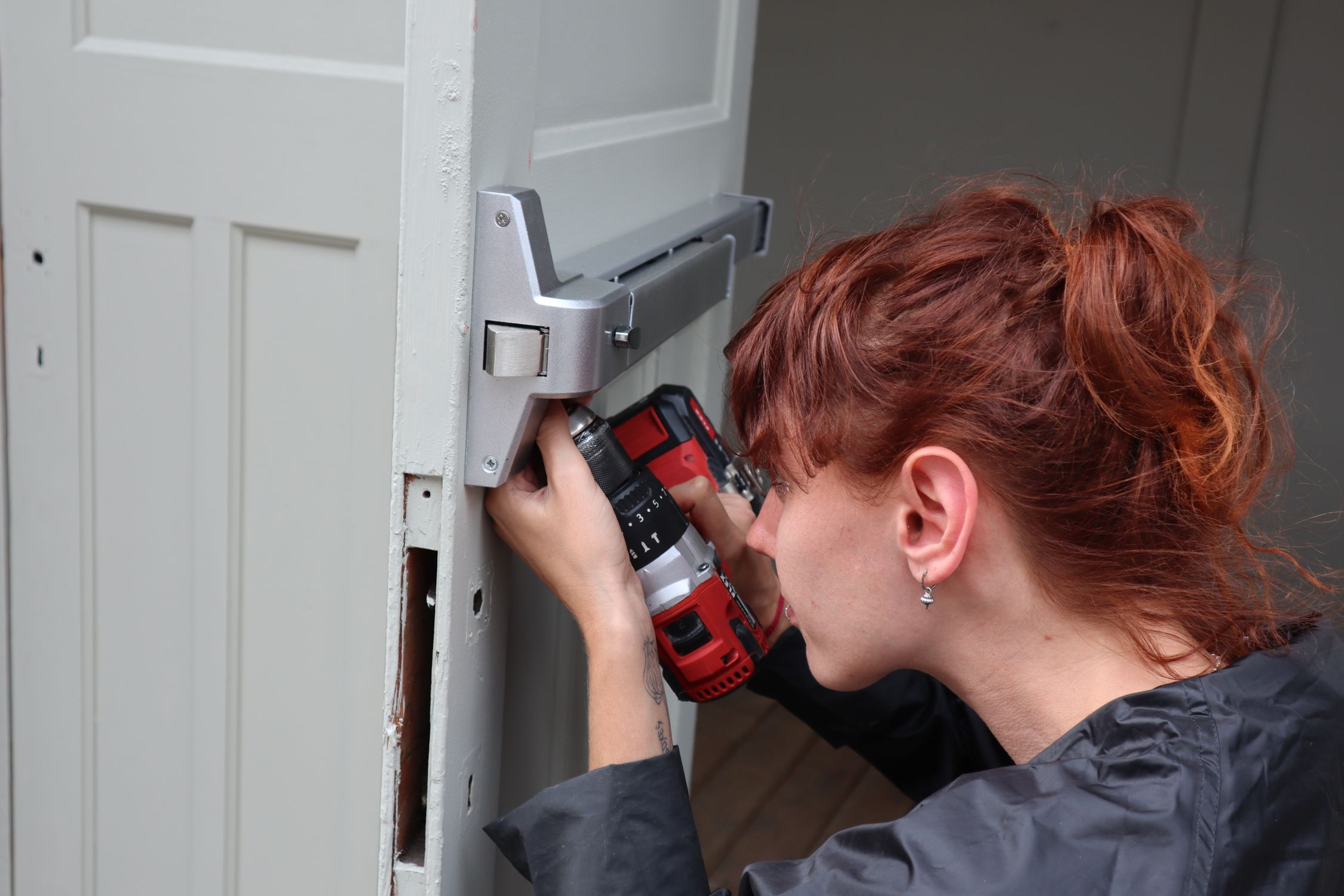
How to Secure Your Home After a Burglary
The first priority after a break-in is getting the door secured. After that, assess what was bypassed and fix it properly. Here is the order of steps.
Step 1: Get the property secured tonight
If the door will not close, lock, or has a broken frame, the property is not secure. That is the first problem to solve — everything else can wait until morning.
Call a locksmith and tell them the property is unsecured. Most will come out that night. We board up or brace the entry point immediately, then carry out a proper repair once parts are available.
Do not attempt to repair or board up a door yourself if you do not have the right materials. A poorly secured door gives a false sense of safety.
Step 2: Get a crime reference number
Call 101 (or 999 if the burglary is in progress or very recent). The police will attend where possible and take a statement. Ask for a crime reference number — you will need it for your insurance claim.
Do not disturb the entry point before police attend if you can avoid it. The scene may have forensic value.
Step 3: Call your insurer
Most home insurance policies cover lock changes, boarding up, and door repairs after a break-in. Call as soon as you have the crime reference number.
Your insurer may have a preferred contractor. If they do, use them — it simplifies the claim. If they do not, keep all receipts from any locksmith or carpenter.
Step 4: Understand how entry was made
This changes what you need to fix. A locksmith can usually identify the entry method from the damage pattern.
Cylinder snapping: The euro cylinder has been broken. The outer section is missing or the lock face is damaged. Fix: replace the cylinder with a TS007 3-star anti-snap unit. Also check whether the remaining cylinder protrudes more than 3mm — this makes it easier to grip and snap.
Kick-in at the keep: The door frame is split where the lock bolt sits. The door itself and lock may be fine. Fix: repair the frame with a reinforcement plate and consider adding hinge bolts to distribute force. A new lock in a broken frame is pointless.
Lock picking or bumping: Less common but leaves minimal visible damage. Worn mortice locks with 3 or fewer levers are most vulnerable. Fix: replace with a BS3621 5-lever deadlock.
Window entry: If the door was not the entry point, change the lock anyway — but also address whatever window was used.
Step 5: Upgrade what failed
There is no point fitting the same lock that was bypassed. After a cylinder snap, fit a 3-star anti-snap. After a kick-in, reinforce the frame before fitting a new lock. After a picked mortice lock, upgrade to BS3621.
Also consider:
- Hinge bolts on any door that swings inward — these prevent the door being lifted off its hinges from outside - Door frame reinforcement strips on timber doors — a steel insert behind the keep - A secondary lock on the door if the current single deadlock was the only security
A note on repeat targeting
Properties that have been burgled are statistically more likely to be targeted again within the following weeks, often by the same person. They know the layout, they know what was inside, and they now know what the door looks like when secured.
Changing the lock is not enough on its own if the frame is damaged. Make the property look fully repaired and secured from the outside.